
New York/New Delhi — The United Nations Security Council’s Sanctions Monitoring Team has flagged the alleged involvement of Pakistan-based terror outfit Jaish-e-Mohammed (JeM) in an attack on New Delhi’s Red Fort in November, while also noting the formation of a women’s wing within the group.
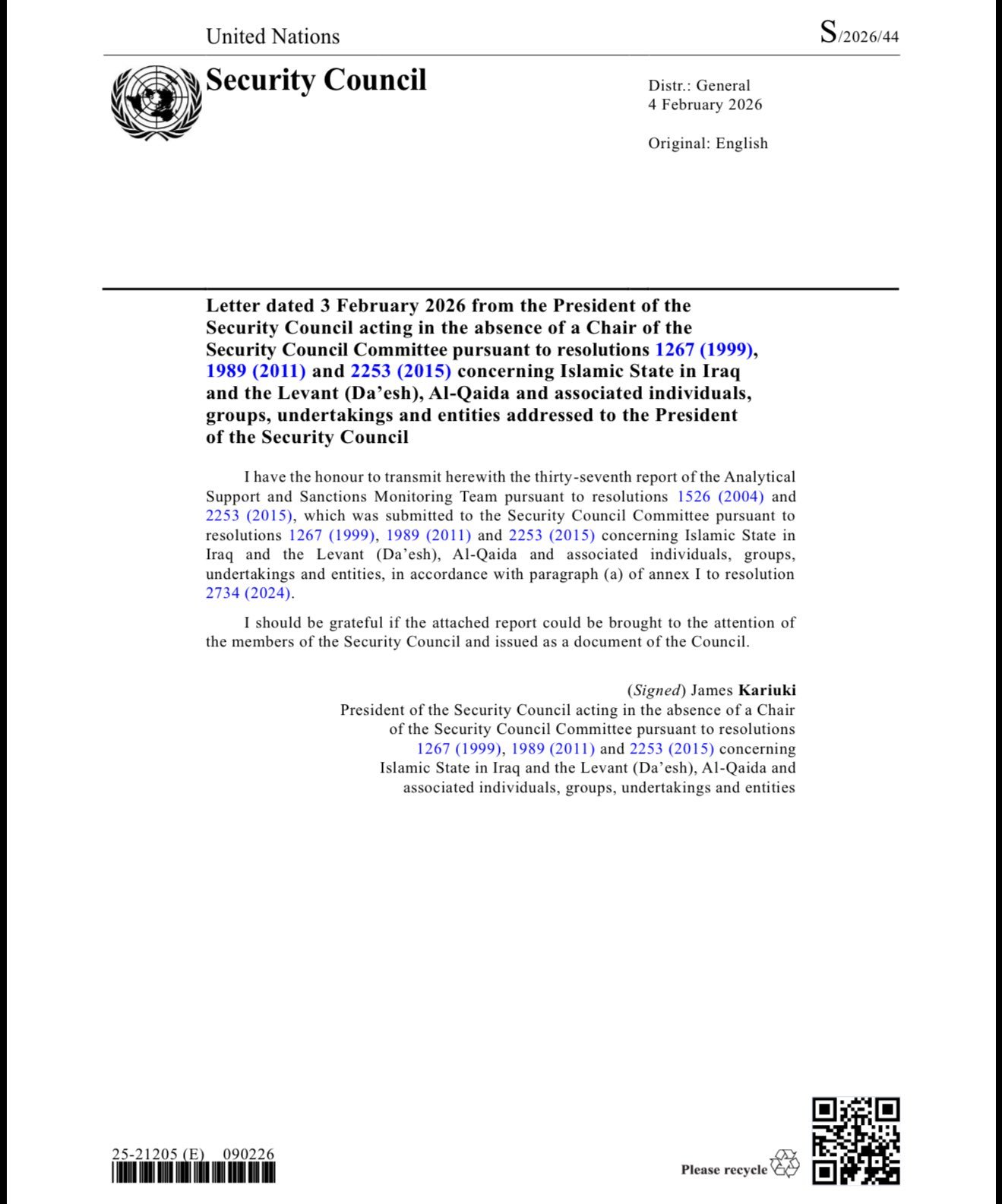
The observations are part of the thirty-seventh report submitted by the Analytical Support and Sanctions Monitoring Team to the Security Council Committee overseeing sanctions against Islamic State (Da’esh), Al-Qaida and associated individuals and entities.
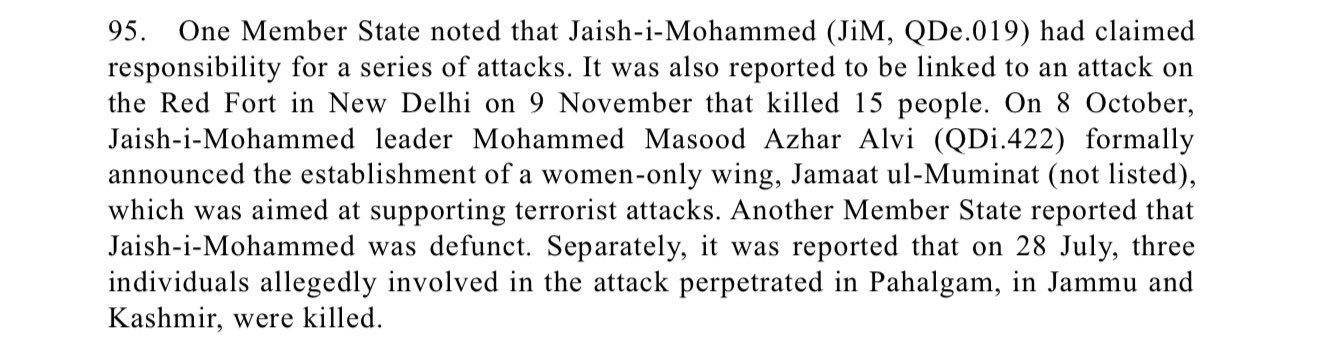
According to the report, one Member State informed the Monitoring Team that Jaish-e-Mohammed (QDe.019) had claimed responsibility for multiple attacks. It was also reported to be linked to an assault on the Red Fort in New Delhi on November 9, which left 15 people dead.
In addition, the report states that on October 8, JeM leader Mohammed Masood Azhar Alvi (QDi.422) formally announced the establishment of a women-only wing named Jamaat ul-Muminat. The wing, which is not currently listed under UN sanctions, was described as being intended to support terrorist activities.
The UNSC Sanctions Monitoring Team flagged Jaish-e-Mohammed’s reported role in the Red Fort attack and highlighted the development concerning the creation of the women’s wing as part of its broader assessment of the group’s activities.
However, the report reflects differing views among Member States regarding JeM’s current operational status. While one country reported ongoing activity and claims of responsibility for attacks, another Member State indicated that the group was defunct.
Separately, the document noted that three individuals allegedly involved in an attack in Pahalgam, Jammu and Kashmir, were killed on July 28.
The findings form part of the UN’s ongoing monitoring mechanism under Security Council resolutions 1267 (1999), 1989 (2011) and 2253 (2015), which impose sanctions on entities and individuals associated with Al-Qaida and Islamic State.
The Security Council continues to review information provided by Member States as part of its counterterrorism oversight framework.
