
Chandigarh: Haryana Chief Minister Nayab Singh Saini on Saturday directed the Public Health Engineering Department to prepare a time-bound five-year action plan to ensure provision of clean drinking water and sewerage facilities up to every household across the State.
Chairing a review meeting on the department’s roadmap under Haryana Vision-2047 at the Haryana Civil Secretariat, the Chief Minister reiterated that drinking water and sanitation remain top government priorities and called for adoption of global best practices in service delivery.
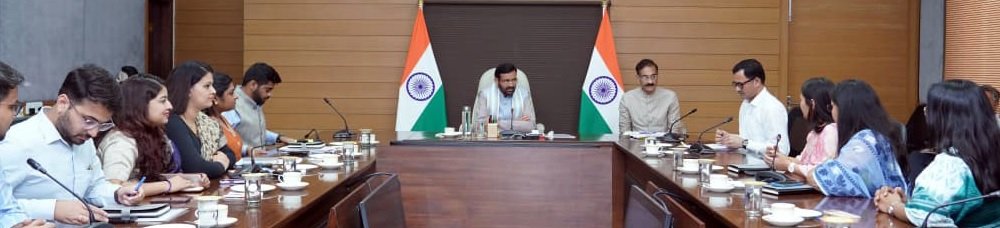
He reviewed the status of water supply and sewerage infrastructure in urban and rural areas, including 100-square-yard plots allotted by the Government and newly approved colonies, and further directed the officers concerned to ensure complete coverage of basic civic services in a time-bound manner.
The Commissioner and Secretary, Public Health Engineering Department, J. Ganesan, presented the five-year roadmap, outlining proposals for strengthening water supply systems, expanding sewerage networks, reuse of treated wastewater, centralized monitoring of Sewage Treatment Plants (STPs), and deployment of AI-based grievance analysis systems.
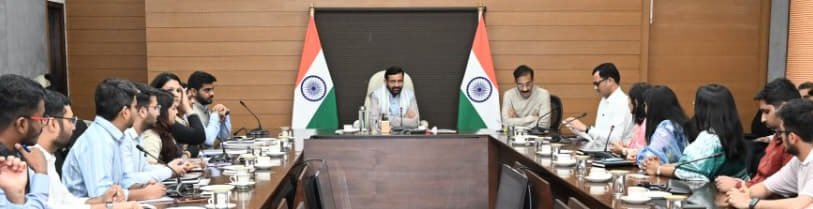
The Chief Minister directed preparation of a plan for setting up water treatment plants for every 5,000 population and ensuring canal-based supply to all waterworks. He also emphasized prioritization of drinking water, sewerage, power, and road infrastructure in regularized colonies and allotted plots.
Calling for development of smart cities with 24×7 water supply, he suggested pilot implementation in select cities such as Gurugram, where 100 percent of households have metered water connections. He also directed minimizing water loss by transporting canal water to treatment facilities through pipelines.
On sewerage systems, the Chief Minister directed comprehensive household coverage and upgradation of ageing infrastructure through modern techniques to reduce road-cutting inconvenience. He stressed designing sewerage systems with long-term capacity of 50–60 years and promoting reuse of treated wastewater for industrial and agricultural use.
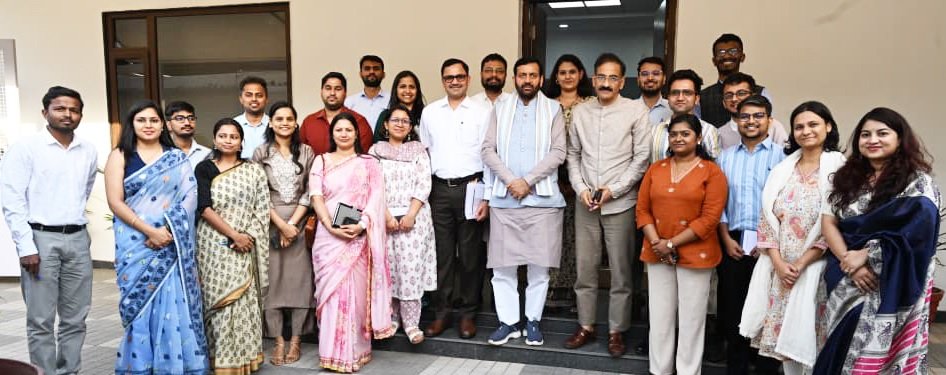
The Chief Minister further directed improved coordination among departments to avoid repeated road excavations for utilities such as water, sewerage, gas, internet, and oil pipelines, and proposed a dedicated mechanism to regulate permissions for such works.
Chief Principal Secretary to Chief Minister, Rajesh Khullar, Chief Secretary, Anurag Rastogi, Principal Secretary to Chief Minister, Arun Gupta, Principal Secretary, Department of Future Smt. Amneet P. Kumar, Commissioner & Secretary, Energy Department, Ashima Brar, OSD to the Chief Minister, Dr. Raj Nehru, Deputy Principal Secretary, Yashpal Yadav, and other senior officers also remained present during the meeting.
