
DHURI: Chief Minister Bhagwant Singh Mann on Wednesday said Punjab has ended the decades-long wait for ownership rights to houses built in the Lal Lakir, handing Property Ownership Certificates to families under the ‘Mera Ghar Mere Naam’ scheme and marking the beginning of a process that will provide legally recorded ownership, mapped property boundaries and access to institutional credit.
Taking to X, CM Bhagwant Singh Mann stated: “The massive gathering at the Dhuri rally has proved that the echo of our work resonates in every household of Punjab. By ending politics centred around families, we have made a historic beginning towards freeing Punjab from the ‘Lal Lakir’. Around 4,000 villages will soon get proper property registrations. We have gifted Dhuri a ₹47 crore water project.
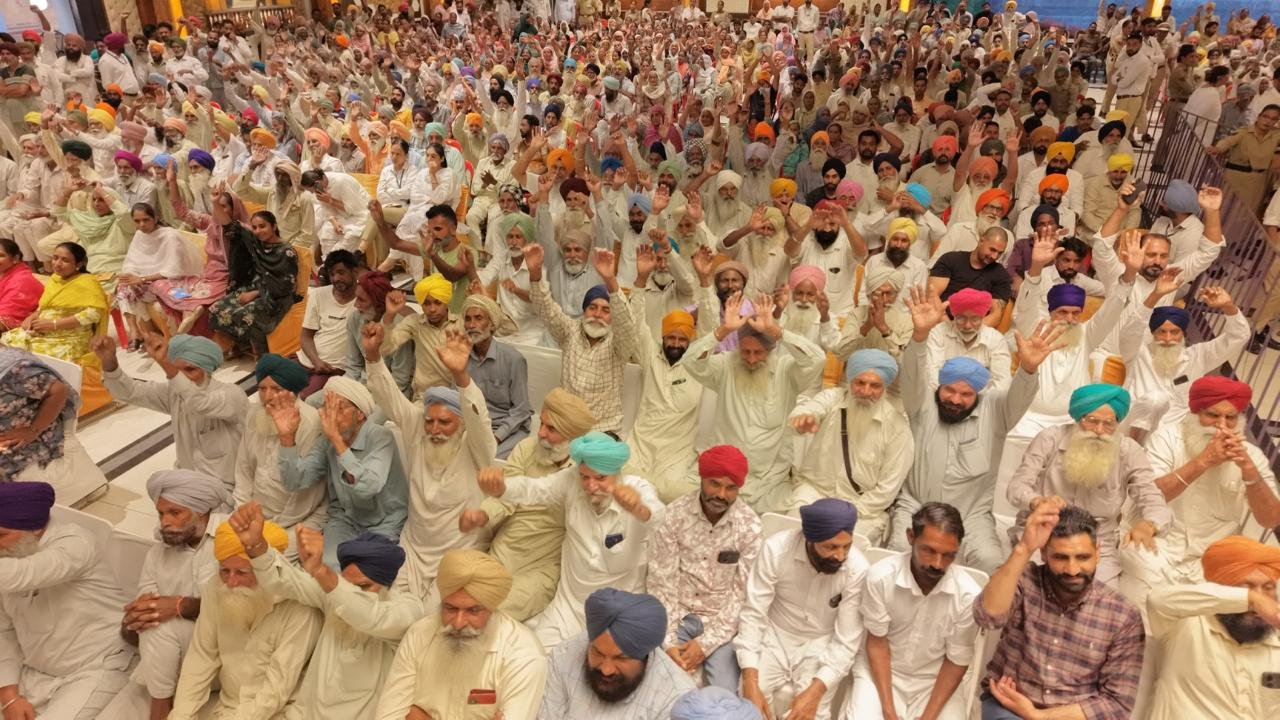 Addressing the gathering, CM Bhagwant Singh Mann said, “The objective of the ‘Mera Ghar Mere Naam’ scheme is to provide every eligible family with a clear ownership right and documentary recognition of its own home. Our resolve is to ensure that the home of every eligible family is entered in the official records and that the family receives a document recognising its ownership. This initiative will strengthen the rights, dignity and future security of the people.”
CM Bhagwant Singh Mann said, “Several families in the villages have been living in their homes within the Lal Lakir for generations, and the absence of formal ownership records often creates various difficulties for them. A clear ownership document for a home where several generations of a family have lived is extremely important. The primary objective of the ‘Mera Ghar Mere Naam’ scheme is to provide eligible families with legal recognition of their ownership rights over their homes.”
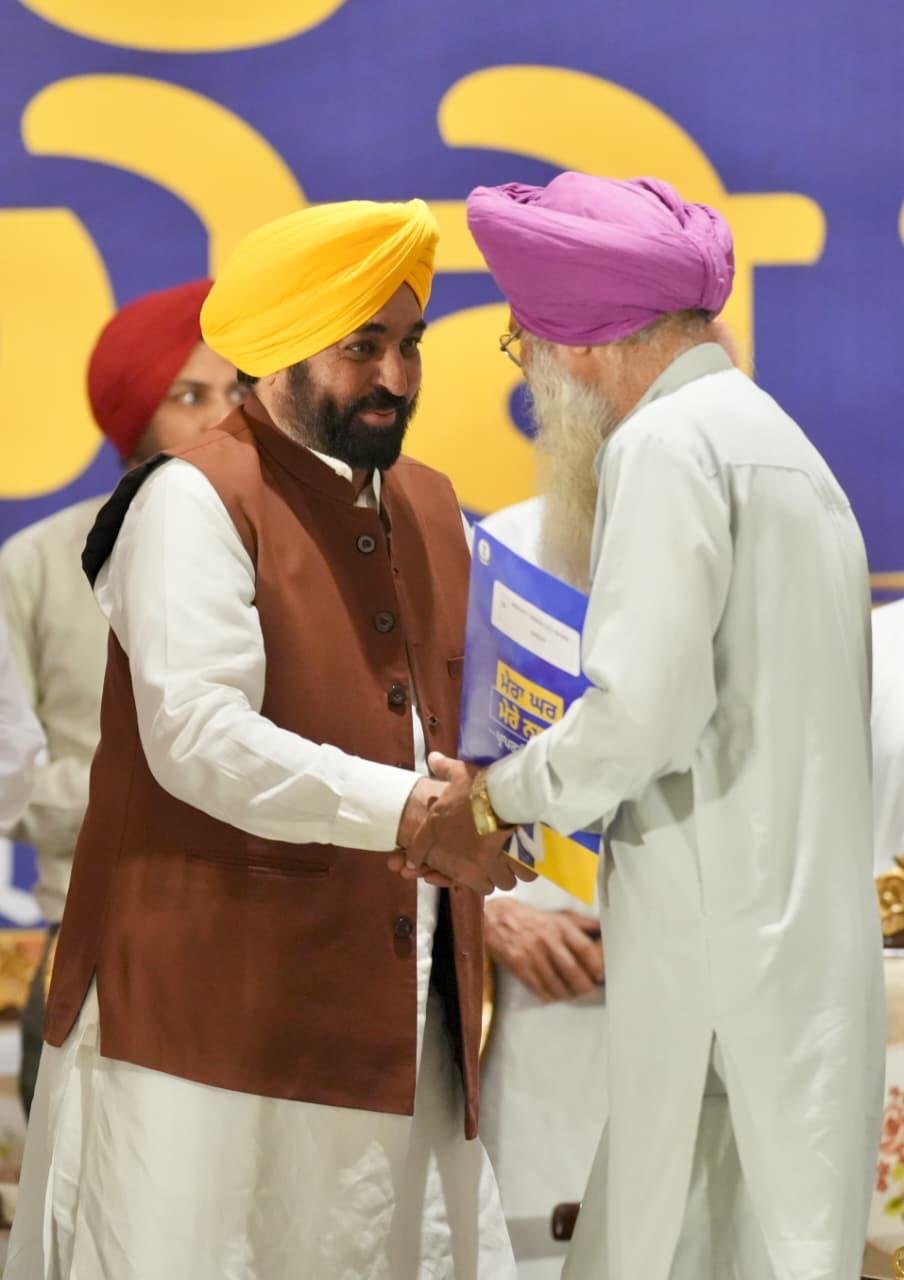
He said the initiative will give people greater confidence to maintain and improve their homes and plan for their families’ future. “Our goal is to ensure that the benefits of this scheme reach every eligible family and that ownership records relating to their homes are clearly established,” he said.
Once finalised, the Record of Rights is formally attested and the Property Card is generated from it. The card carries the survey unit number, GPS location, drone map and QR code for online verification, giving the family a documented and verifiable record of its property. This is particularly significant for poor and Scheduled Caste families who have no land outside the abadi and for whom the house may be their only property.
