
Chandigarh, February 12, 2026: The India–US Trade Deal has triggered strong political reactions in Punjab, with the Aam Aadmi Party (AAP) staging protests across multiple districts during the Bharat Bandh. Party workers took to the streets, raising slogans against what they described as a “fatal agreement” for Indian farmers and traders.
During demonstrations, protestors alleged that the proposed agreement could negatively impact Indian agriculture, particularly dairy and small-scale farming sectors. Placards displayed during the protests highlighted concerns over duty-free American agricultural imports entering Indian markets.
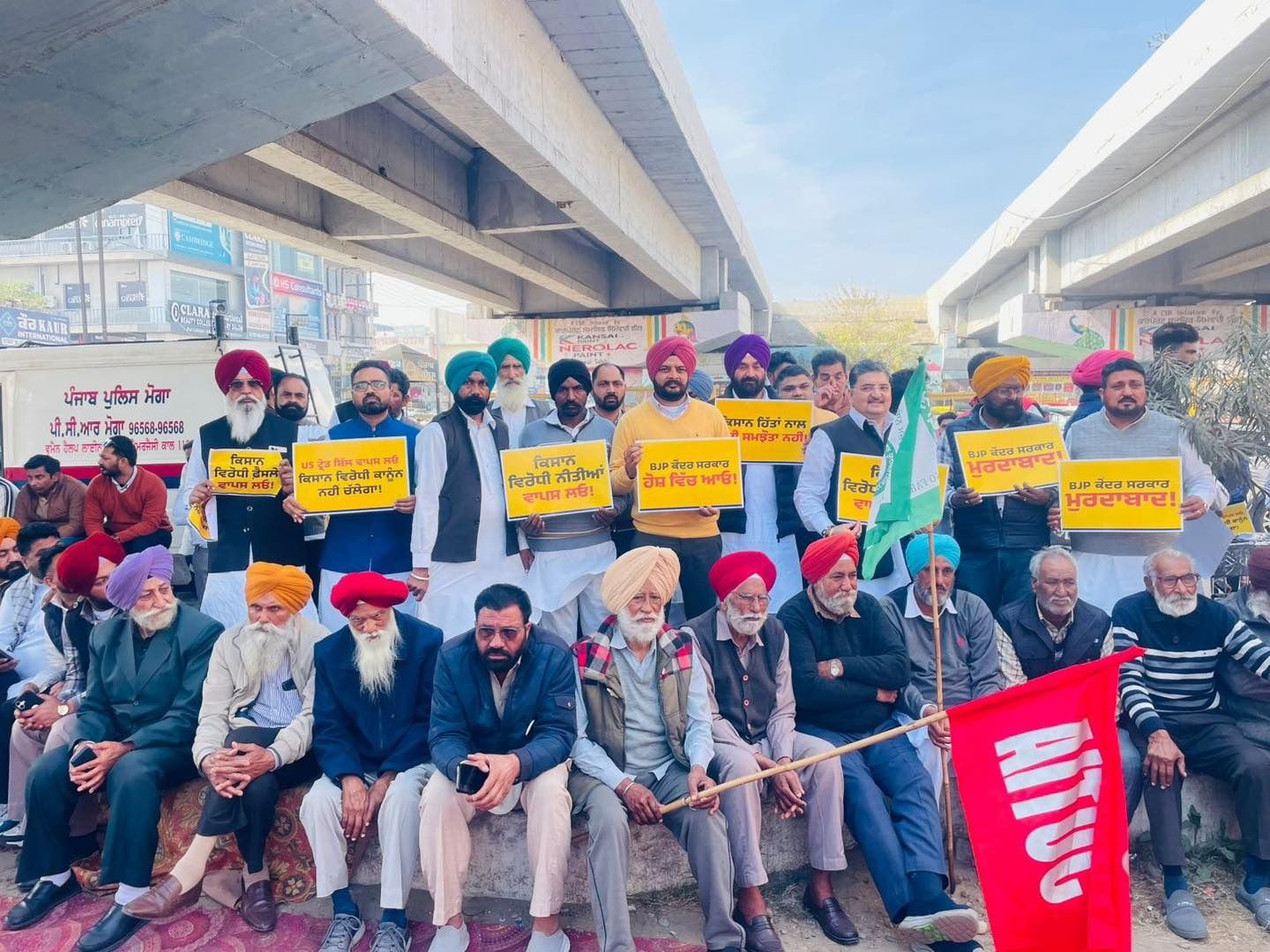
Concerns Over Impact on Indian Farmers
Farmers’ representatives claimed that the India–USA trade agreement would allow the import of American dairy and farm products without tariffs, potentially affecting local producers. Trade analysts note that tariff structures significantly influence domestic agricultural competitiveness.
According to trade policy frameworks published by the World Trade Organization (WTO), tariff reductions can reshape domestic markets depending on subsidy levels and import volumes.
Tariff Imbalance Debate
Protestors also raised concerns over what they described as an unequal trade structure, arguing that while American goods may enter India at low or zero tariffs, Indian exporters could face duties in the United States.
Detailed trade frameworks and tariff policies are published by the Office of the United States Trade Representative (USTR), which outlines US trade agreements and tariff structures.
Economic Implications Under Discussion
Political leaders participating in the protest described the deal as potentially harmful to India’s agricultural economy, warning that cheaper imports may affect small dairy operators and traders.
India’s bilateral trade agreements are overseen by the Ministry of Commerce and Industry, which publishes official trade updates and policy documents.
Growing Political and Economic Debate
The Bharat Bandh protest in Punjab reflects wider national debate around the India–US trade deal impact on farmers. Economists suggest that trade agreements must balance global market access with domestic protection mechanisms to safeguard local industries.
As discussions continue, observers believe the coming weeks may witness further policy clarifications regarding the impact of foreign agricultural imports on Indian markets.
